Message of Hope

Damola Morenikeji and Nigeria's President, Olusegun Obasanjo - as the latter affirms his hope for Nigeria and Nigerians

Leading the Future

ADM and some pupils at one of his programme.

Spare the Rod and Spoil the Child

Aanu Damola Morenikeji and Obiageli "Oby" Ezekwesili (CFR); World Bank's Vice President for Africa.

Award

Damola Morenikeji with the Governor of Ogun State, Senator Ibikunle Amosun after becoming the first recipient of the Ogun State Youth Award for Excellence in Health and Community Service.

Showing posts with label Science. Show all posts

Wednesday, 22 February 2012

2012 Zeitgeist ‘Young Minds’ Competition: Call for application

The 2012 edition of the Zeitgeist ‘Young Minds’, a competition to find 10 pioneers, change-makers and leaders of tomorrow aged 18 – 24, across Europe, Middle East and Africa* is now open. The winners will take their place alongside the greatest visionaries of today at Google Zeitgeist 2012 near London on May 20th – 22nd 2012.

From January 25th until March 19th 2012, the search will be on to find 10 exceptional, motivated and inspiring 18-24 year-olds from across EMEA*, who are making a positive impact in the world through science, the arts, education, innovation or inspiration.

The lucky winners will be invited to participate in Google’s annual Zeitgeist event, where previous speakers have included Archbishop Desmond Tutu, Burberry CEO Angela Ahrendts, Google CEO Larry Pageand Chairman Eric Schmidt. They will also win a brand new Google tech gadget and get the chance to take to the stage and have their voice heard.

Last year saw the first ever ‘Young Minds’ competition in both the UK and America. The lucky finalists won an experience of a lifetime, from meeting Chelsea Clinton and Will I Am, to taking part in panel discussions with Jon Snow and Martha Lane Fox (Co-founder Lastminute.com).

Orli Setton was a winner from 2011 and described attending Zeitgeist as “magical, fantastic and powerful! What I enjoyed most was the innovative, energetic and creative atmosphere.
Matt Brittin, Vice President of Northern & Central Europe, Google commented, “Google has always championed innovation and is proud to help young people showcase their ideas and achievements. Zeitgeist Young Minds is an incredible opportunity for future world-changers to meet some of the most powerful and inspiring people on the planet today.

The winners will take part in a series of bespoke master classes with the aim of inspiring as well as giving them mentoring to help further their project and get their hands on the latest Google gadget. But what’s even more exciting is that a select few will also get the opportunity to take to the stage and have their voice heard. Here are the highlights from last year’s panel discussion with Martha Lane fox, Jon Snow and our Young Minds winners http://youtu.be/6_LYNwuaub4

To be in with a chance of winning a place at Zeitgeist 2012, all entrants have to do is simply upload a video no longer than a minute telling us how they are making a difference to the world towww.ZeitgeistYoungMinds.com

The competition is open to entrants from the following countries within EMEA:
South Africa, Algeria, Germany, Saudi Arabia, Belgium, Egypt, Spain, France, Ireland, Israel, Italy, Jordan, Kenya, Morocco, Nigeria, Uganda, Holland, Poland, Czech Republic, United Kingdom, Russia , Sweden , Tunisia & Yemen.

Source: www.ZeitgeistYoungMinds.com
Tuesday, 4 October 2011

Dangers of Mobile Phones

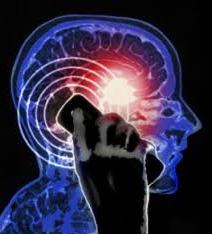
 I was reading the papers last week and stumbled on this article written by Ayodeji Ganiu and published in TELL magazine on the dangers of mobile phones.


It started as a rumour. Now researches have confirmed that radiations from cell phones are deadly to users. Recent research results have shown that waves coming from cell phones are harmful to the physical body and organs such as the heart. Research has also shown that cell phone radiations may also affect reproductive organs adversely. Gaby Badre, a medical doctor at Sahlgren’s Academy, Gothenburg, Sweden said, “Addiction to cell phone is becoming common. Young ones feel a pressure to remain inter-connected and reachable round-the-clock. Children start to use mobile phones at an early stage of their life.

There seem to be a connection between intensive use of cell phones and health compromising behavior such as smoking, snuffing and use of alcohol.” Badre is not alone. Many scientists believe that radiation from mobile phones may cause the users to exhibit different symptoms like headache, earaches, blurring of vision and even causing cancer. In view of these, mobile phone users are advised to reduce the usage of their phones as much as possible. But mobile phone addiction is a big social problem.

Psychiatrists believe that mobile phone addiction is becoming one of the biggest non-drug addictions in the 21st century. Gbenga Adebayo, president, Association of Licensed Telecommunications Operators of Nigeria said, “many sleep with their phones under their pillows and others put it in their pockets. Nigerians should be sensitised on phone usage to minimise any harm that might eventually arise from prolonged use of it.” Indeed, cell phones have become a major part of culture. It used to be a tool for business alone and now it has become a key of communication for personal use, for families, and now, even for children.

Today there are more than two billion cell phone users being exposed every day to the dangers of electromagnetic radiation, whose existence government regulators and the cell phone industry have refused to admit. Some of the dangers include genetic damage, brain tumours, and other conditions such as sleep disorders and headaches. Besides, experts warn that the number of hours used on mobile phone is irrelevant as the danger mechanism is triggered within seconds. For a safer use of cell phones, the World Health Organization has issued a number of guidelines. These include the fact that mobile phone users should limit their exposure to harmful radio frequencies by cutting the length of calls and use hands-free devices to cut exposure by keeping the instrument away from the head and body. These, the global health body says, will go a long way to help people minimize the dangers associated with excessive use of mobile phone.