Message of Hope

Damola Morenikeji and Nigeria's President, Olusegun Obasanjo - as the latter affirms his hope for Nigeria and Nigerians

Leading the Future

ADM and some pupils at one of his programme.

Spare the Rod and Spoil the Child

Aanu Damola Morenikeji and Obiageli "Oby" Ezekwesili (CFR); World Bank's Vice President for Africa.

Award

Damola Morenikeji with the Governor of Ogun State, Senator Ibikunle Amosun after becoming the first recipient of the Ogun State Youth Award for Excellence in Health and Community Service.

Showing posts with label Leadership. Show all posts

Friday, 22 July 2016

On Perseverance and Little Big Things

Keep doing what you do, as long as it makes positive sense!

Over the last few weeks, I have been having conversations about perseverance, failure and excellence. I heard humbling experiences of friends and colleagues as we all shared moments where we learned from failure and not-too-good moments. When some of these people talk about the successes of what they do, it seems they had never 'down' moments.

Tonight, Wisdom and I were checking my cabinet, when we came across the raw hand-written manuscript of a book I wrote in 2006. Ten years ago! Wisdom did some c
alculations and we both screamed 'Wow!'. I laid on the bed and smiled as my 14-year old brother read and pointed out some mistakes in the manuscript. He was equally challenged.

Have you been bothered about the mistakes you've made (or are making), just breathe. Breathe and breathe. Take out time to review and learn from your actions and the experiences of others.

Lessons: Keep records of the little / big things you do. Take time to review and reexamine what you do. Learn good lessons. When though time comes, remember why you set out, seek relevant lessons from others and quit not.

It works; in business and life.

Damola
July 22, 2016. Ng.

Monday, 6 June 2016

Growing with Young African Leaders

If there is one thing i crave insatiably, it is growth.

Damola Morenikeji and Linda Thomas-Greenfield
Few weeks ago, I joined other young African leaders / professionals selected (out of over 14,000 applications) for the US President's Young African Leaders Initiative RLC Fellowship. I grew. I am still growing - daily.

Our individual commitment to growth is paramount; it influences our leadership, actions and results. The daily actions by friends and partners (even you and others on this platform) to drive positive change around the world is equally commendable. I see you - like I had, before now.


Let's keep growing, doing and being. We can #BeMore.

[Photo: Linda Thomas-Greenfield (US Assistant Secretary of States for Africa) and Damola Morenikeji at the US Ambassador's Office in Ghana]
Other images, courtesy the US Embassy in Ghana are below.
Damola Morenikeji, US Ambassador to Ghana Robert Porter Jackson and Amewuda Getrude

Some of the Young African Leaders hosted by the US Ambassador to Ghana

Sunday, 27 March 2016

More than a Million Pounds


Over one million thoughts engaged one another in my head, after seeing the premiere of 'One Million Pounds' along with some other Young African Leaders.
For us to sustain the 'Africa Rising' reality, Africans must place further value on values, honour and integrity instead of money and cheer materialism. We are worth more than these things. More. We need to build institutions, not only strong individuals.
Our commitment to excellence shouldn't be second place; that's one of the basic things that can make us lead our place well. Whatever we do, as Africans is our message to the rest of the world. Let's make our message worthwhile. 

Bring it on, no matter how much we may tend to fall, let's keep rising.‪#‎AfricaRising‬.

ADM

Friday, 1 January 2016

Of Flipping Calendars, Leadership and Gratitude


What other way may one flip over the calendar than being in a state of happiness, humility and genuine gratitude, encouraged by the realization that one’s actions are still serving as blessings to several other young people and societies in Africa and across the world. It is indeed humbling and ‘graceful’.
Damola Morenikeji advices on value and responsibility
The last three days – till now – have been filled with severely intensive growth and learning experiences as we engaged the fourth cohort of our annual youth leadership programme, Studership. Each day has been unique both for participants – numbering about a hundred from nine countries – and our faculty. Considering the quality of discuss and daily feedback from the young leaders participating in the ‪#‎Studership‬ 4.0 Leadership Programme, I remain optimistic that it is possible to enhance our world with young people being empowered and committed to consistently creating value by solving most of the biggest challenges we face, without comprising on integrity and other values.
Going forward, few hours ago, I got informed of my emergence as the Winner of the 2015 African Youth Awards for Excellence in Leadership. Another graceful experience. This honour is made possible because of people like you who believed in possibilities. People like you whom truly are passionate about making systems work and encouraging responsible and value-based leadership. People like you who showed love and responsibility, through your thoughts and actions. Thank you.
Today, as we plan towards the next eighteen-score and few days, I come forward, with a humble heart to celebrate you. Our team at AllforDevelopment celebrates you. Do not let us relent; let’s live through this year consistently valuing personal integrity and responsibility, principle of love and perseverance, practicing genuine humility, consistently learning and valuing people / relationships.
We can all make Nigeria, Africa and the world a better place. Accept my felicitations on your great endeavours this ‘new’ year, as you work towards it! I look forward to your ‘testimonies’ soon!
God bless you, indeed!

Damola Morenikeji
@DamolaMore
7E06F40E
01/01/2016

Saturday, 21 February 2015

Beyond the Idea; making entrepreneurship work

Some thirteen weeks ago, I led a team of young innovative entrepreneurs – all undergraduates – to the a national contest for ideas; it was the National Idea's contest organised by the Nigerian Universities Commission for all Nigerian universities, as part of the Annual National Entrepreneurship Week, in commemoration of the 2014 Global Entrepreneurship Week.

Our 6-human team shared an innovative idea, which if thoroughly implemented will reduce hidden hunger, while building human capacity / productivity, strengthening mental prowess/energy, increasing academic and managerial excellence, reducing maternal and infant mortality, indirectly reducing crime/violence and at the long run, increasing the average life expectancy. The effect of the idea cuts across health, education and human development sectors. The project was a result of a deep 'ideation' process – facilitated by our protem social innovation lab –, well thought-out research and deeply informed consultations, across board.
Image courtesy: FUNAAB

The competition was huge; but alas! We emerged finalists, and was rated one of the best teams – along with a sister team, in the country. Better put – everyone won :). Ideas always win, regardless of human ratings. Several weeks after that experience, I was reviewing – again – one of the lessons I re-learnt during and after the entrepreneurship week.
All ideas are important, but the people are more important. I imagine what might have become of us, if at the 'ideate' stage, we had focused more on carving out and refining our idea BY OURSELVES, without bringing a right set of people in – the beneficiaries. When we were brainstorming and getting clarity on what we want to achieve through the project, we had to involve representatives of clusters of affected communities; this made and still makes human-centered innovation efficient, the decisions inclusive and gives ownership across board.
Transforming ideas into reality requires clarity; it requires thinking from our goals, not only of it. It requires building a network, community or team of committed minds, who though divergent in thought are convergent in the collective mission. A team bonded in trust and other values, prepared to give their honest quota in realizing the shared vision. Beyond the ideas, we need to understand the system that influences our sphere of work. Understanding the system helps heretics like you and I to modify / create a better pattern within the system.
As we step out of our ideation corners, with lofty ideas on our hearts, head and palms, let us create time to build relationships that can drive the change we seek. Relationships help me learn, take risks and grow. Take precious moments to build trust-based relationship with your team and innovative community. That idea you cherish will generate solutions to at least a problem. Some people will immensely benefit from that idea. Have you thought about them? Have you brought them in?
Your idea counts, so do they!
Let's connect and continue our conversation on LinkedIn, Twitter or Facebook.

Saturday, 12 April 2014

Our Responsibility as Humans


One of our responsibilities as concerned humans is to stir ourselves up to the knowledge of the truth, and stimulate one another to love, helpful deeds and noble activities.

I quite agree that this world doesn’t need more people who are doing what they think they should be doing and staying where they are out of a false sense of obligation. What this world needs is more people who are stepping into their truth, showing up fully in their relationships and work in the world, and people who are joyful, passionate and on purpose'

We can all contribute more to (personal/ #leadership / community/national/global) development by embracing this responsibility.

Let's unite and take action. We can do MORE!

ADM

Friday, 21 March 2014

Growth Galley - Be Careful of Your Thoughts [Podcast]

Great day!

It is delighting to welcome you to the Growth Galley. The Growth Galley is a periodic podcast aimed at enriching our collective growth; for us to grow right, lead right and live right.

In this episode, we are exploring the creative and destructive power of thought - depending on which you choose to explore. 

Click HERE to listen.

I will love to read / hear your view. You may comment below, send me a mail or let's connect via Facebook / Twitter.

Much love,

Damola (@DamolaMore)

Tuesday, 4 March 2014

Building Productive Habits as an Entrepreneur

Productivity is key as a leader and entrepreneur. I consciously remind myself that it is not just enough to get busy, but to get busy fulfilling purpose – being productive. 

Thoughts on my most productive habit as a social entrepreneur was published, along with that of other ‘successful’ entrepreneurs on IdeaMensch, under the fifth habit in the ‘35 Habits That Successful Entrepreneurs UseTo Get Shit Done’.

I agree that to be excellent as an entrepreneur, you need to prioritize your daily activities, make a to-do / not-to-do list, get up early,  read, learn and grow, find your most productive time and focus. The quality of your thought is an important factor is making positive and effective impact on yourself and your environment.

As I shared ‘weaving thoughts, contrasting it with resources at hand, and continually envisioning the effect of its realization though may be tasking, but is much fun’.

Read and learn (and digest) the 35 Habits That Successful Entrepreneurs Use To Get Shit Done’ (http://ideamensch.com/35-productive-habits/).

I’ll implore you read, digest and share this post with others within your network. It is worth the time!

Stay productive!

Aanu Damola Morenikeji

Monday, 10 February 2014

Defining Success as a Leader [Photo]

I agree that #success is not just about what you accomplish / achieve solely in your life, it is also about what you inspire others to do.

One of the best instruments to inspire / influence others positively is your ears and deeds, not only your tongue.

How do you define success?

___
Let us connect on Twitter and Facebook.

ADM

Monday, 27 January 2014

Measuring Your Listening Quotient

Every great leader is a good listener. We have emphasized overtime the importance of communication in leadership development. I have learnt - through the absence of communication - how a community of vibrant thoughtful minds can become disengaged and moribund.

Listening Quotient
In as much as communication is important, listening is more important. Communication is faulty, if listening is phorny or ingenuine. I have witnessed several occasions when hearing, rather than listening is the order of the day. Thus, the essence of this post to challenge us to evaluate our listening quotients.

So, how do you measure your listening quotient? My formula for listening quotients is strength of active listening divided by unit time.

For my friends, who likes mathematics - only for the spelling, let me deviate from the mathematical expression and  highlight some key elements of active listening.

Attention
When listening to the next person that speaks with you, watch the quality of attention you give out. Let it be said about you that 'S/He listened to me like I'm the only person in the world, at that time'. Guide your attention.

Sincerity
One of the greatest gift you can give is your sincere and loving self. It is said that people do not care what you know until they know how much you care.

Minding your body
Body language plays an important role when listening actively to someone. Position your body, eye movement to be in unison with what your mind speaks which is 'I care, I am listening'. Nothing is more disappointing that observing that the person you are speaking with is hearing (not listening) what you are saying and his body communicating his absence.

It is necessary to be true to yourself and whoever you are discussing with. If circumstances will impede you actively listening to anyone, tell the person with all modest sincerity and love.

Listening is critically essential!

Question: Looking back into the last few discussions you had with anyone, how effective did you actively listen? If you were told to calculate your listening quotient, what percentage will you be rated? What other element did I not mention?

Let's connect on Twitter or Facebook.

ADM

Wednesday, 13 November 2013

Reflective Thinking: How Often Do You Think?

I know you think! And you know / think you think. However, how much time do you dedicate to reflect on your life – your actions, inactions, values, achievements, frailties, prospect and the future? How often do you examine the pace - most importantly, the impacts – you create each day?

These questions remind us of the ever-dynamic need to consciously and consistently examine how we live (not just existing) daily. As the Greek philosopher, Socrates opined, 'an unexamined life is not worth living'. A few days ago, I shared an opinion with IdeaMensch on my most productive habit as a social entrepreneur - and human :). Guess what that is: reflective thinking.

Each day, I become more conscious of the need to do more than just setting out time to consciously think, but to make it fun, and more productive. This daily action makes me get the best in almost every activity. The choice of reflectively having fun thinking through all my actions and plans makes me review promptly where I had made a mistake, where I can contribute more, what lessons I learnt, how I can put the lessons to use, what to share with others, among other options.

Fortunately, my parents had inculcated a maxim into our daily lives, while we (my nuclear family) were much younger. My dad taught my siblings and me to always end each day asking 'How Many Lives Have I Touched Positively Today?'. This bed-time activity - I must confess - had been a foundation for reflective thinking.

One of the major catalysts to reflective thinking is asking the right questions. The right questions - coupled with honestly sincere answers - have a way of enhancing your reflective thinking prowess and adding value to the quality of life you live. Most times, when I reflect, I think in terms of my values, activities, experience and futurity.

I suggest you brace up with the type of questions you ask yourself, and be honest in working on the quality of result you can get, by working on your answers. As John Maxwell shared in his book 'Thinking for a Change', you could reflectively think about – just as he does – your values, relationship and experiences.

THINKING RELATED TO VALUES
•          Personal Growth: What have I learnt today that will help me grow? How can I apply it to my life? When should I apply it?

•          Adding Value: To whom did I add value today? How do I know I added value to that person? Can I follow up and compound the positive benefit he or she received?

•          Teamwork: What did I do with someone else that made both of us better? Would the other person agree that it was a win/win? Can we do something else together to continue our mutual success?

•          Leadership: Did I lead by example today? Did I lift my people and organisation to a higher level? What did I do, and how did I do it?

•          Physical Health: Did I exercise at my optimal heart rate for thirty-five minutes today? Have I exercised at least five times in the last seven days?

•          Personal Faith: Did I represent God today? Did I practice the Golden Rule? Have I ‘walked the second mile’ with someone?

THINKING RELATED TO RELATIONSHIP
•          Marriage and Family: Did I communicate love to [my spouse], children and the grandchildren today? How did I show love? Did they return it?

•          Friends: Have I been a good friend this week? To whom? What did I do? Is there something else I need to do? Is there another friend who needs me?

•          Inner Circle: Have I spent enough time with my key players? What can I do to help them be more successful? In what areas can I mentor them?

•          God: Have I spent time with God? What is he teaching me now? Am I learning? Am I obeying? Have I continually talked to him today?

THINKING RELATED TO EXPERIENCE
•          Discoveries: What did I encounter today to which I need to give more thinking time? Are there lessons to be learned? Are there things to be done?

•          Memories: Did I create a good memory for someone today? Was it because of a comment, an action, or a shared experience?

•          Difficulties: What went wrong? Could I have changed it? What do I need to do differently next time?

•      Successes: What went right? Did I create it? Is there a principle I can learn from the experience?

•          People: Whom did I meet? What were my impressions?

•          Conclusions: Have I closed my day appropriately? Have I expressed gratitude? Have I learned something, loved someone? Have I enjoyed and lived the day to the fullest?

Are the above questions helpful? You may add yours, or create different set of questions and methods to use in reflective thinking. Begin by creating general questions that can be used after any event, meeting or experience. Then create more specific questions related to your values and relationships. The main thing is to create questions that work for you, and write down any significant thought or insight that comes to you during the reflection time.

Before I conclude today’s post, please be reminded that though writing down the good thoughts that come out of your reflective thinking has value, nothing helps you grow than consciously putting your thoughts into action. Start setting out time for reflective thinking, stay away from distraction, ask yourself helpful questions and take prompt action.

I will love to read from you. Post your comment in the box below, or send me a mail (damolamore@gmail.com).

How often do you engage in reflective thinking?
What impact does it have on you?

What questions do you ask when thinking reflectively?

Wednesday, 2 October 2013

Be Prepared for Leadership

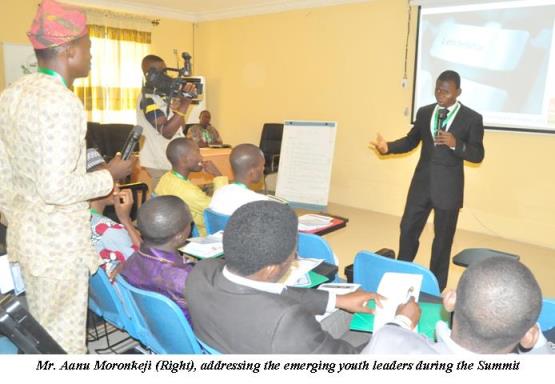
A wake-up call has gone to youths to prepare themselves for leadership positions at all levels in order to make the positive changes the nation requires for development. Delivering a presentation at a 2-Day Studership 2.0 Leadership Summit held recently, the Team Leader, All for Development Foundation and a 400L Plant Physiology and Crop Protection (PPCP) student , Mr. Aanu Damola Morenikeji, described leadership not as a position, rank, privilege, title or money, but pure responsibility.
Be Prepared for Leadership - FUNAABite Tasks Youths
According to him, the qualities of an effective leader include having basic intelligence, clear and strong values, high levels of personal energy, the ability and desire to grow constantly, vision, curiosity and a good memory. Alluding to the maxim which says, “the future has no shelf life”, future leaders will need a passion for continual learning, a refined, discerning ear for the moral and ethical consequences of their actions and an understanding of the purpose of work and human organisations”. He advised the youths to be mindful of their character as competence would get them to the top, while character would keep them there.
Be Prepared for Leadership - FUNAABite Tasks Youths

Mr. Morenikeji added that the four things that stand leaders out are: having a clear idea of what they want to achieve and why. Secondly, leaders change the way people think and not just the way people do things, as well as living up to expectation when there is a crisis or special problem.
The Fellow of the M121 Social Leadership Academy, USA, demystified the ‘Studership’ word to be a combination of students and leadership.
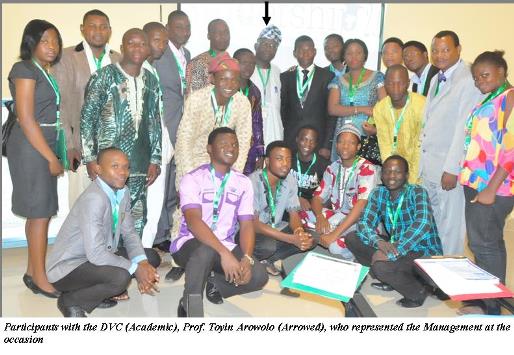
Earlier, the Vice-Chancellor, Professor Olusola Oyewole, who was represented by the Deputy Vice-Chancellor, Academic, Professor Toyin Arowolo, advised the youths of the country to be resilient, adding that they must accept the responsibility of leadership.
The Vice-Chancellor encouraged Nigerian youths to make the most of their leisure, taking advantage of their time to engage in productive programmes, instead of idling away.
In his Goodwill Message, the Ogun State Commissioner for Youth and Sports, Honourable Olugbenga Otenuga, who was represented by the Deputy Director, Youth Development, Mr. Salami Adetokunbo, commended the organisers for the well-organised summit.
Answering questions from FUNAAB Bulletin after the programme, one of the Participants, a member of the Accra Metropolitan Assembly, Ghana, Mr. Abdul Basit Osumanu, said “we face the same challenges of leadership in Africa. We have frustrated youths across Africa not trusting the leadership”. He, therefore, advised the youths saying “we need to trust whoever is leading us, adding that “the change we need should come from us”.
Also, Mr. Serge Kpoglo, a student at the University of Lome, Togo was elated to have been privileged to visit Nigeria for the first time and promised to share the knowledge gathered at the Summit with his colleagues back home.
Similarly, Mr. George Gambadatoun, a student at the National School of Applied Economics and Management, Cotonou, Republic of Benin, lauded the hospitality of Nigerians, a country he had visited thrice, saying that “I feel at home whenever I visit Nigeria”. He said his country shared a lot with Nigeria in terms of culture, dressing and language.

You may read the news from the source: Federal University of Agriculture's website
Note:
The Studership 2.0 Leadership Programme was featured on the Federal University of Agriculture, Abeokuta's website. It is worthy of note that the summit was supported by the institution.

Friday, 27 September 2013

Making Your Days Here Count!

Exactly a week ago, i was sharing with some emerging leaders from across Nigeria, Ghana, Republic de Benin and Togo on 'Integral Leadership' at the #Studership 2.0 Leadership Summit (Pictures here).

I was delighted at the radiation of 'senses' of commitment as we exchanged ideas, on personal growth and leadership development - revolving around vision, values, ethics, passion for continuous learning and understanding purpose.

Like we do remind ourselves, that in everything we do, we (un)consciously sign our autographs. Make the unconscious conscious; what do you do to sign your autograph? Where/How do you sign it? It isn't compulsory the autographs are conspicuous, but just MAKE YOUR DAYS HERE COUNT!

Later next week, we shall be having a guest post, related to the theme of leaving positive autographs, starting from the person sitting beside you.

Till then, I will be glad  to read from you, with much love!

Keep growing, keep leading!


ADM
t: @damolamore
f: www.facebook.com/admnigeria
e:damolamore@gmail.com

Wednesday, 4 September 2013

Attend the Studership 2.0 Leadership Summit

I highly recommend the Studership 2.0 Leadership Summit for emerging leaders to actively participate in. 

The summit – which is the climax of Studership 2.0 Leadership Programme, an initiative of All for Development Foundation, aimed at engaging, connecting and equipping emerging leaders for sustainable change, while promoting integrity and values-based leadership for practical, personal and professional application – will bring together emerging leaders, facilitators and other distinguished individuals who will share their expertise through series of advanced leadership workshops.


The Summit holds between Thursday, 19th September, 2013 and Sunday, 22nd September, 2013 – with arrival set for Thursday, and departure for Sunday – at Abeokuta, the capital city of Ogun State, Nigeria.

Visit this link for further details.

Thursday, 22 August 2013

Do you also believe these myths about leadership?

This week, during the online phase of the Studership 2.0 Leadership Programme, we took a different approach to our discuss, as some  top myths conceived and transmitted – over time – about leadership were shared and discussed.
As we grow, we had been exposed to several erroneous definition and attribute of leadership and concepts around the field. These opinions have, overtime, affected our views of, and action towards growth, effectiveness, efficiency and making positive change.
Some common myths about leadership we shared include the following;
1. Leadership is a rare skill.
Leadership is considered by some to be a rare skill, a skill possessed by a certain opportune set of people. While great leaders may be rare, everyone has leadership potential. Yes, most people in some way – whether conscious or not – are exercising leadership in a particular context. For example, you may find someone might be quiet and passive in their job, but quite bossy at home, or lead in conversation but not in formal meetings. Leadership opportunities are everywhere.
2. Leaders are born, not made.
On the commencement of the online discussions in the Studership 2.0 Leadership Programme, we deliberated on whether leaders were born or made. The major capacities and competencies of leadership can be learned, and we are all able to learn, at least if the basic desire to learn is there. Effective leadership is, however, is more than simply having the desire and enacting the ‘right’ behaviours, it needs to include a deep awareness of the impact of one’s behaviour on others. In turn, leadership development now needs to involve the development of the whole person, stressing self-awareness and balance in life (making the leader).
3. Leaders are Charismatic
Some are, most aren’t. Charisma is the result of effective leadership, not the other way around, and most who are good at leadership are granted a certain amount of respect and even awe by their followers, increasing the bond of attraction between them. Interest in charismatic and transformational leaders has been fuelled by the nature and strength of their emotional impact on others. In the past, leadership was conceived of in terms of transactional terms. Transactional leadership is characterised by mutually beneficial exchanges between two parties to optimize mutual benefit. While this model produces somewhat predictable outcomes, these are generally short-lived. The last two decades have seen an increasing interest in a new type of leadership:transformational leadership. Transformational leadership operates through tapping into followers’ deeper values and sense of higher purpose, and has been found to lead to higher levels of follower commitment and effort, as well as more enduring change. Transformational leaders provide compelling visions of a better future and inspire trust through seemingly unshakeable self-confidence and conviction.
4. Leadership exists only at the top of the organisation (e.g the boss)
Leadership is a choice you make, not a place you sit. Anyone can choose to be a leader wherever he is. In fact, the larger the organisation, the more leadership roles it is likely to have as people lead smaller groups within the whole. As John Maxwell puts it, leadership is influence. When emerging leaders understand the dynamics of gaining influence with people, they come to realise that position has little to do with genuine leadership. Do individuals have to be at the top of the orgaisational chart to develop relationship with others and get them to like working with them? Do they need to possess top leadership titles to achieve results and make people productive? Of course not. Influencing others is a matter of deposition, not position. You can make a difference no matter where you are. Lead, don’t manage.
5. The leader controls, directs, prods, manipulates.
Leadership, power and authority are linked – who gives the leader a mandate to lead is important. Leadership is not dictatorship. We should not view leaders as puppet-masters pulling the strings to make people move, but see the people as the ones that can decide to support, influence, change, defy or subvert the leaders. Power is held by the leader and the people they lead, and in the ideal situation, a good leader empowers the people to make changes to their community.
6. The greater your age, the better you are as a leader.
Leadership, is not valued based on age, but on commitment to growth. There is a major difference between growing and ageing; growth may be exponential, while ageing may follow numerical procedure (counted year after year). Without digressing, age is not a criteria for effective leadership, but vision, commitment, positive influence and growth.
Once these myths are cleared away, the question becomes not one of how to become a leader, but rather how to improve your effectiveness at leadership.
Let's read from you;
  • What other myth is believed in your various communities/countries? Share with us.
  • Think of a real life situation where a leader made a positive difference. Did they act as managers or leaders? What behaviours did they show? What lessons about leadership can you take away from the life situation you have thought of?.

_________

Aanu Damola Morenikeji is considered Africa’s youngest youth intellectual and leadership development advocate. A sought-after speaker on the theme of leadership and personal growth, he is an alumnus and fellow of the M121 Social Leadership Academy, U.S.A and founder of Studership Youth Leadership Academy – an initiative of All for Development Foundation [ADM-Foundation]. He blogs at www.admnigeria.blogspot.com and can be reached via damolamore@gmail.com.